





Working From Rest, Not For It
The same week of work can rest on fear or on trust. What the Sabbath command, the manna story and motivation research say about the why under your work.
Read the full article →
October 21, 2026

Understanding the patterns that keep you stuck; counselling for anxiety, grief, burnout, trauma, and meaning.
Colwood (Westshore) Office | Serving Greater Victoria & Online Across BC

Integrating the clinical rigour of Counselling Psychology and the existential depth of a Master of Divinity with the conditions of high-stakes work.
Sean Lewis draws from a background as an infantry soldier, trades business owner, and nine years leading teams in pastoral ministry and street outreach to address the complexity of human difficulty, from the search for meaning to the daily grind, utilizing the science of healing and the art of care.
Whatever brings you to therapy deserves serious attention. Specialized support is available in these areas.
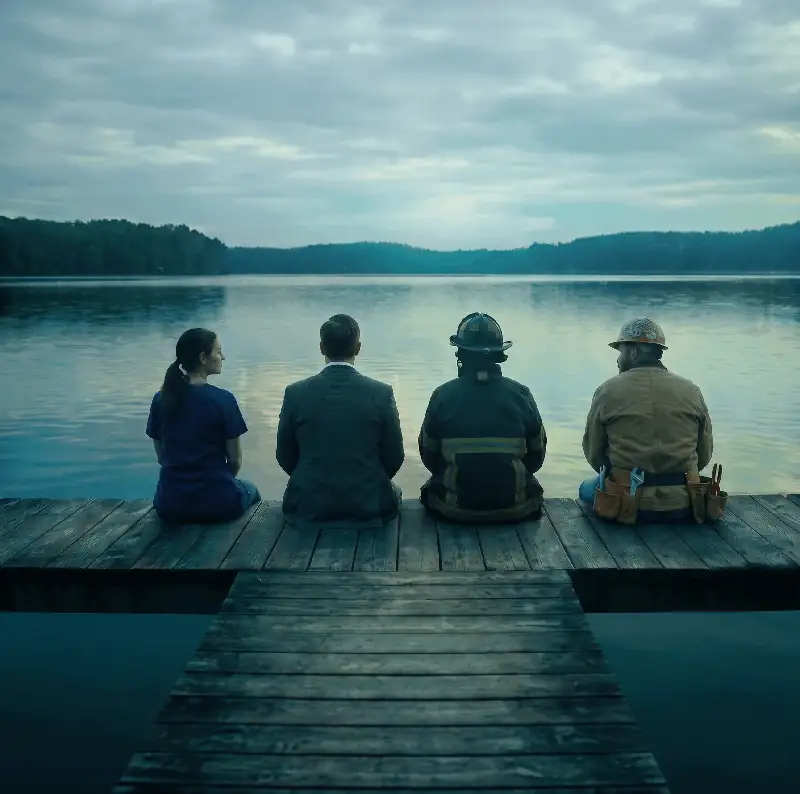
Rebuild capacity without adding more to your impossible list.
Explore Stress & Burnout
Break free from sticky thoughts and endless mental loops.
Explore Intrusive Thoughts
Explore meaning and purpose with psychological and theological depth.
Explore Spiritual & Existential Exploration
Understand what's stuck and reconnect with what matters most.
Explore Depression & Mood
Examine patterns beneath the surface, build healthier connection skills.
Explore Relationships & Connection
Untangle inherited patterns so you respond, not just react.
Explore Family of Origin Work
No scripts, no runaround. Just practical work that respects where you’ve been and where you’re headed.
A short 15-minute call to discuss your goals, no commitment.
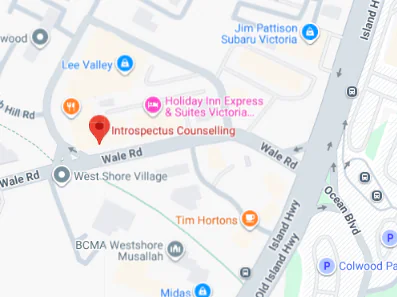
132-328 Wale Rd, Colwood, BC V9B 0J8
Phone: 250-556-4623
Email: sean@introspectuscounselling.ca
Your privacy is paramount. I adhere to rigorous professional standards to ensure your comfort and safety. I offer in-person appointments in the Greater Victoria Area (Colwood Office) and accessible, secure online support for clients throughout British Columbia.
Therapy is informed by evidence-based and trauma-aware approaches, while remaining flexible and responsive to you, not a diagnosis. I draw from cognitive, acceptance-based, trauma-informed, mindfulness, and relational frameworks.
I work with adults experiencing stress and burnout, anxiety, depression, trauma and PTSD, grief and loss, relationship challenges, and family-of-origin concerns. Sessions are collaborative, paced, and grounded in safety.
CCC counselling services are eligible for coverage under most extended health benefit plans; coverage varies, so check yours.
 Canada Life
 Co-operators
 Coughlin & Associates
 CVAP
CVAP
 Dialogue
 Empire Life
 Equitable Life
 UV Insurance
 GMS
GMS
 Green Shield Canada
 iA Financial Group
 ICBC
ICBC
 Johnston Group
 Manulife
 Pacific Blue Cross
 Sun Life
 TELUS Health
 Medavie Blue Cross
 People Corporation
 ProviderConnect
 RWAM
RWAM
 Simply Benefits
Your first appointment will be different from subsequent ones. This session, often called an “intake evaluation,” is focused on gathering information. I will ask questions about your personal history, your family background, your current challenges, and what brought you to therapy. This is also your opportunity to ask questions and to begin collaboratively setting some initial goals for our work together. I will guide the conversation, so you don’t need to worry about preparing anything.
Therapy is much more than just “venting” or talking about your feelings, though both are welcome. A session is a collaborative exploration conducted in a safe, confidential, and non-judgmental space. You and I will work together to explore your thoughts, feelings, behaviours, and life experiences to identify recurring patterns, build insight, and develop new skills and perspectives. My role is to listen deeply, ask thoughtful questions, offer reflections, and, when appropriate, teach you evidence-based strategies to help you achieve your goals.
This is the most important thing to know: you set the pace, and you are in control of what you share. You will never be forced to talk about anything you are not ready or willing to discuss. I will respect your boundaries and understand that trust must be earned over time. The goal is that, in time, you feel comfortable enough to explore difficult topics, but that exploration will always happen on your terms. There is no “right” or “wrong” way to be a client; the most important thing is to show up authentically, just as you are.
When you first contact me, our initial conversation is designed to understand your needs. I will ask about the challenges you are facing and what you hope to achieve in therapy. Based on this information, we can begin to determine if my expertise and approach align with your specific situation.
Choosing a therapist is a deeply personal decision and one of the most important steps you can take for your well-being. The connection you build, the therapeutic alliance, is the foundation for meaningful change. I encourage you to be an active participant in this process. Here are some steps to help you determine if Introspectus Counselling is the right fit for you.
1. Explore My Approach and Story
I believe that effective therapy comes from a place of both professional expertise and authentic human experience. My approach is eclectic and client-centred, meaning your unique story and goals are at the heart of our work together. I work with individuals navigating a wide range of concerns, including anxiety, depression, stress, grief, trauma, relationship difficulties, and life transitions.
My professional and personal journey uniquely shapes the care I provide:
This blend of clinical training, spiritual insight, and real-world experience allows me to offer a space that is both scientifically grounded and human.
2. Reflect on Your Personal Goals
Take a moment to consider what you hope to achieve. Having a sense of your goals can help clarify whether my approach aligns with your needs.
3. Book a Complimentary 15-Minute Consultation
Ultimately, the best way to know if we are a good match is to connect. I offer a complimentary 15-minute consultation to all potential clients. This is a two-way street: it’s a chance for me to understand your needs and for you to assess if you feel comfortable with me.
During our conversation, I invite you to ask yourself:
Finding a therapist you trust is the first step. My goal is to provide a place where the science of healing truly meets the art of care, and I would be honoured to start that conversation with you.
A standard therapy session, often called a “therapeutic hour,” is a 50-minute dedicated appointment. We’ll typically use the first 5-10 minutes to check in on your week and review your progress, sometimes using brief questionnaires. This helps us ensure we stay on track with your goals.
The core of our session is a protected space for you to talk openly. During this time, we will actively work together using specific therapeutic interventions tailored to your needs. To ensure your success and make lasting progress, you will be encouraged to apply what we discuss by completing “homework” or practising new skills between our appointments.
For therapy to be most effective, particularly in the initial stages, consistency is key. I highly recommend weekly sessions for the first three months. This regular cadence helps to build momentum and foster a strong, trusting relationship between you and a therapist, a factor known to be essential for positive outcomes.
As you progress toward your goals, the frequency of sessions can be adjusted collaboratively. For clients navigating a particularly acute crisis or who wish to do more intensive work, meeting twice a week may be an option, contingent on your therapist’s availability and a joint clinical determination that this is appropriate. Conversely, as you begin to feel more confident and integrate new skills, you and your therapist may decide to taper sessions to every other week. I also understand that financial considerations are a reality for many, and we allow for less frequent sessions to ensure that cost does not become an insurmountable barrier to receiving care.
The total length of time you spend in therapy is highly individualized and is not predetermined. It is a decision made jointly between you and your therapist, guided by the goals you set together. Some clients seek therapy to address a very specific, short-term issue and finish once it feels resolved. Others engage in a longer-term process of self-exploration and growth, remaining in therapy for a year or more as they continue to pursue deeper goals and practise new ways of being. All of this said, it is also possible to come in for 2-3 sessions and feel the issue has been resolved with the newly introduced skills learned in therapy.
Many people worry about being locked into therapy with no way out. That is a fair concern. You are an equal partner in deciding how long we work together, and we can revisit it at any session.
Regardless of the duration, we strongly recommend that your final session be planned in advance. This allows you and your therapist to thoughtfully review your progress, summarize the work you have done, and provide a sense of closure. A planned ending gives you time to look back at what changed and what you want to keep doing. For ongoing support, some clients find “booster sessions”, a single follow-up appointment scheduled several months after regular therapy has concluded, to be a helpful “tune-up” for maintaining progress over the long term.
Ultimately, the pace and success of your therapy are significantly influenced by the work you do between our sessions. Therapy is most effective when it is an active, collaborative process. The clients who experience the most profound and lasting change are typically those who commit to applying new strategies, practising skills, and completing reflective exercises outside of the therapy room. This commitment helps to bridge the gap between insight and action, turning the 50-minute session into a catalyst for continuous growth in your daily life.
Fees & What to Expect
I want costs to be clear and straightforward: no surprises.
Current session fee (50 minutes): $150
Many extended health plans cover Canadian Certified Counsellors; coverage varies, so check yours.
Jane app, the portal I use for payments, accepts cash, Visa and e-transfer.
Good news: As a Canadian Certified Counsellor (CCC), services from Introspectus Counselling are eligible for coverage under many extended health insurance plans in British Columbia; coverage varies, so check yours. Most major insurers include CCCs in their mental health benefits, but coverage varies by specific plan.
Direct Billing
Introspectus Counselling offers direct billing to select insurance providers, which means the practice can submit claims on your behalf and you’ll only pay any difference not covered by your plan. Direct billing availability depends on your specific insurance company and plan.
Before your first session, contact the practice at sean@introspectuscounselling.ca to confirm whether direct billing is available for your insurer.
Self-Submission for Reimbursement
For insurance companies where direct billing isn’t available, the process is simple:
Verify Your Coverage
Before booking, contact your insurance provider to confirm:
Not sure if you’re covered? Contact Introspectus Counselling and we can help you navigate your insurance questions.
A Resource for Mental Health Tips
The same week of work can rest on fear or on trust. What the Sabbath command, the manna story and motivation research say about the why under your work.
The fight that keeps coming back is rarely about the thing you are fighting about. What is actually running, why it repeats, and the move that interrupts it.
Why unwanted thoughts come back louder when you fight them, what loosens the loop instead, and how to tell a scary thought from a warning sign.
Some clients need more than a service list. Find the page written for people in your specific situation. See everyone I help →

You made it home. But home doesn’t always feel like the finish line.
Explore Military Veterans & Service Members
Long days, physical wear, and a culture that doesn’t leave room for struggle.
Explore Trades & Blue-Collar Professionals
You show up for everyone else. The things you carry don’t stay at work.
Explore High-Stress Professions
Trauma-informed counselling after a crime.
Explore Crime Victim Assistance Program (CVAP) CounsellingThe science of healing, the art of care. That is how Sean Lewis practises counselling; grounded in evidence-based therapy, shaped by a life that taught him what people carry when no one is watching.
Sean served in the Canadian Armed Forces infantry. He owned and operated a plumbing business. He spent nine years as a pastor, including six years leading the Mustard Seed Street Church in Victoria, BC, working alongside people experiencing homelessness and addiction. He lived the kind of pressure, loss, and complexity that most people bring into the therapy room.
Today, Introspectus Counselling serves people across Greater Victoria; in Colwood, Langford, Westshore, and Sooke in person, and virtually across British Columbia. Sean’s work is primarily ACT-based (Acceptance and Commitment Therapy), an approach with research support for anxiety and depression, alongside mindfulness, narrative therapy, solution-focused brief therapy, family systems theory, and pastoral counselling.
Whether you are dealing with anxiety that will not quiet down, burnout that has gone past exhaustion, grief that refuses to follow a timeline, or questions about meaning that keep you awake, you do not have to translate your experience here.
Sean Lewis, MACP, MDiv, DPC, CCC, is a member of the Canadian Counselling and Psychotherapy Association (CCPA), and his services are covered by most extended health benefit plans; coverage varies, so check yours. Two public programs can also pay for counselling: ICBC, after a car crash, and BC’s Crime Victim Assistance Program (CVAP), after a crime. Sessions are $150 per 50 minutes. Book a free consultation.