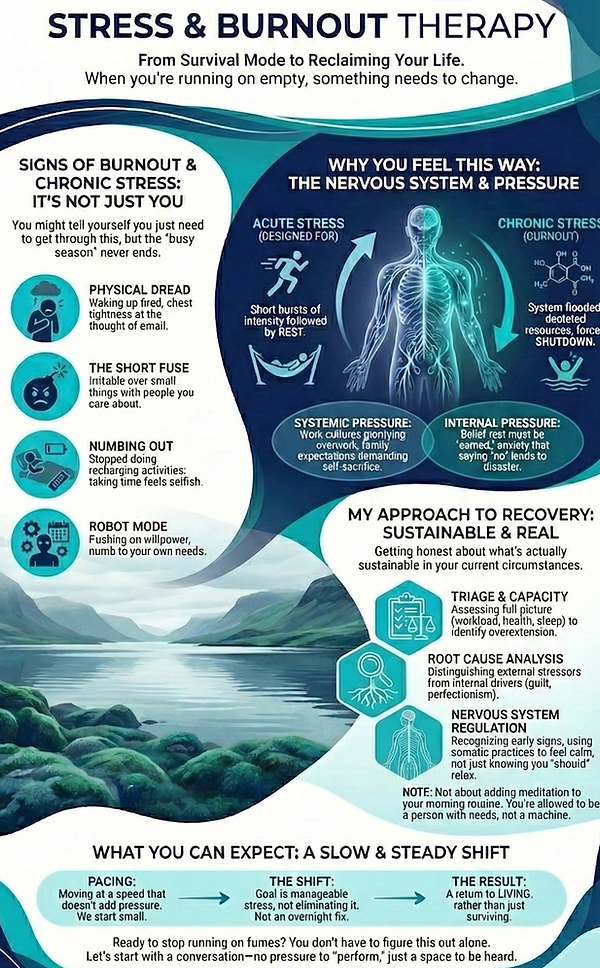
Stress & Burnout Therapy
When you're running on empty and can't remember the last time you felt like yourself, something needs to change.
We'll identify what's draining you, explore what boundaries might look like for you, and rebuild capacity without just adding "self-care" to an impossible list.
This isn't about optimizing productivity; it's about reclaiming your life.
Book a 15 min Phone Call
Signs of Burnout & Chronic Stress
You might tell yourself you just need to get through this busy season, but the busy season never really ends. If you are reading this, you may realize that something more fundamental has to shift.
Common experiences include:
Physical Dread: You wake up already tired. The thought of checking your email makes your chest tight.
The Short Fuse: You feel irritable with people you care about over small things that normally wouldn't matter.
Numbing Out: You've stopped doing the things that used to recharge you because you don't have the energy, or because taking time for yourself feels selfish.
"Robot Mode": You're pushing through on willpower alone—hitting every deadline but forgetting to eat lunch; managing everyone else's needs but numb to your own.

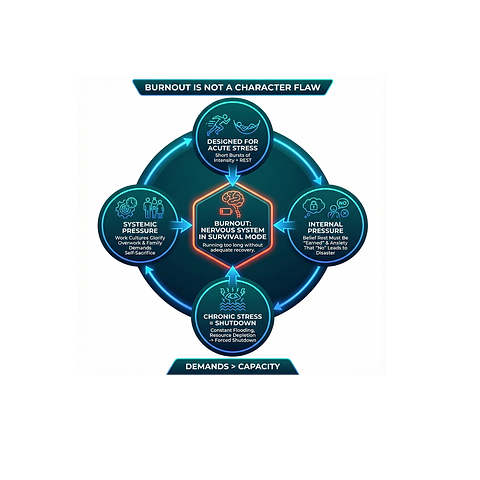
Why You Feel This Way
Burnout isn't a character flaw or a time management problem.
It is what happens when your nervous system has been running in survival mode for too long without adequate recovery.
Your body was designed to handle acute stress—short bursts of intensity followed by rest. But chronic stress keeps your system flooded with stress hormones, depleting your resources until your body forces a shutdown.
Often, burnout develops because the demands on you genuinely exceed your capacity. This is usually compounded by two factors:
-
Systemic Pressure: Work cultures that glorify overwork and family expectations that demand self-sacrifice.
-
Internal Pressure: The belief that rest must be "earned," or the anxiety that saying "no" will lead to disaster.
My Approach to Anxiety Therapy
We start by getting honest about what's actually sustainable. Not what you wish you could handle, but what is real given your current circumstances.
Triage & Capacity: We look at the full picture—workload, relationships, health, and sleep—to see where you are overextending.
Root Cause Analysis: We distinguish between external stressors (which need practical boundaries and negotiation) and internal drivers (like guilt, perfectionism, and high-functioning anxiety).
Nervous System Regulation: You'll learn to recognize your body's early warning signs, like shoulder tension or withdrawal, before you hit complete depletion. We use somatic practices to help you actually feel calm, rather than just knowing you "should" relax.
Note: This isn't about adding mindfulness practice to your morning routine. It's about learning that you're allowed to be a person with needs, not just a machine that produces output.


What You Can Expect
Progress here is not usually dramatic overnight; it is slow and steady.
Pacing: We move at a speed that doesn't add more pressure. If "self-care" feels like a chore, we stop. We start small—with five minutes, or one single boundary.
The Shift: You won't suddenly become someone who never feels stressed. The goal is to build a life where stress is manageable, not your constant baseline.
The Result: A return to living, rather than just surviving.
Page Summary